In simple terms, FPGAs and GPUs are rather similar. Both consist of thousands of processing elements that can be used to perform computations in parallel, both can be configured to perform different functions, and both are available in a range of performance levels.
However, there are also some significant differences between the two. FPGAs do not require a boot process and therefore have the ability to execute code the moment they get power. They also offer significantly better performance and consume less power when compared to GPUs for certain workloads. Additionally, FPGAs are reprogrammable, which means you can use them for any number of applications with just a simple software update as opposed to purchasing new hardware. In fact, FPGAs are so flexible that for certain high-end applications it is common to use multiple FPGAs in tandem — allowing for a single system to be upgraded or reconfigured with ease.
GPUs on the other hand, offer an integrated development environment (IDE) and ecosystem that allows developers who have no background in hardware design to develop an algorithm using familiar programming languages such as C++ or Python among others. This is because GPUs come pre-programmed with their own operating system — meaning they have a boot process that must be completed before.
What are GPUs?
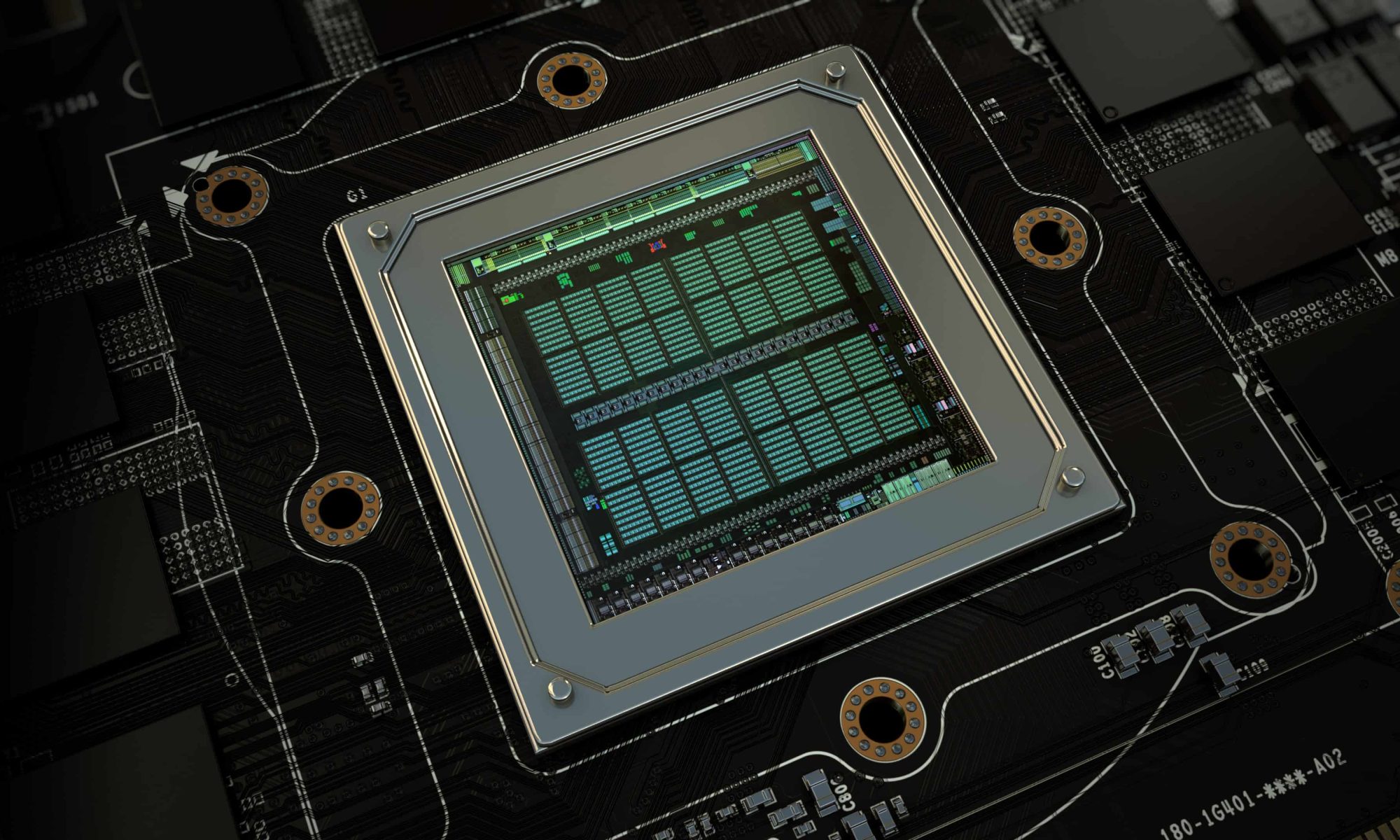
Graphics cards are more popularly known as GPUs or Graphic Processing Units. They were initially designed for graphics only, but have found themselves enhanced to become compatible for use with a number of applications across the board.
In the 1980s, they were only used to offload graphics from the CPU, which used to be extremely simple in that time. As we progressed, graphics began to become more advanced, with the introduction high resolution images, 2D and 3D imaging and video processing, which also meant that GPUs had to become advanced as well. Each image is composed of thousands of pixels which are processed by hundreds of identical cores that are specifically designed to execute multiple functions in a parallel manner. Because of their extremely efficient parallel functioning, GPUs are now being used in a variety of different fields and applications, including some of the world’s fastest ever supercomputers for the execution of multiple mathematical functions all at once.
What are FPGAs?
FPGAs or Field Programmable Gate Arrays are devices comprising of programmable logic blocks which can be configured to perform different logic functions. The logic blocks are connected to each other with electronic wiring that makes for the internal routing system of the chip – interconnects — that can be turned on and off. An FPGA can be reconfigured by programming the logic blocks and manipulating the internal routing. As such, FPGAs can be reprogrammed even after deployment which makes them ideal for systems and devices that need frequent updates such as prototypes, networking products and other electronic systems.
The tasks performed by FPGAs include generating video signals from RAM, implementing high-speed communication protocols, and providing high-performance computing for consumer, automotive, industrial, communications, and military applications.
There are significant differences between an FPGA chip and a CPU/GPU chip. FPGAs have a lower operating frequency compared to CPUs/GPUs but they also have higher clock density. The result is that FPGAs have a much larger gate count than CPUs or GPUs – meaning there are more processing cores in one chip. The gates are also parallel in this case so they can run multiple processes at once while CPUs/GPUs have serial gates which means they can only.
FPGA vs GPU Comparison
Architecture
An FPGA is a big array of programmable gates. This means that an FPGA can be anything, provided the engineer provides the correct configuration to it.
A GPU is a specialized processor. This means that GPUs are very fast in specific cases, like parallel calculations, but they can’t do anything else.
Power Efficiency
In a world where the power consumption of electronic devices becomes more and more important, it is vital to make sure that our electronic devices are as power efficient as possible. And when it comes down to choosing the right device for a certain application, the power efficiency is also one of the main factors.
Both FPGAs and GPUs are not considered as low power devices. But compared to GPUs, FPGAs are considered to be more power efficient solution because FPGAs consist of only hardware functions while GPUs tend to be highly power consuming as they need it to facilitate software programmability therefore consist of much gates. In addition to that, FPGAs came come in many sizes so the designer can choose a device size that fits perfectly to the application.
Processing Power
This is because of the FPGA’s programmability features that adds delays to all the logic gates and to the internal routing. This means that in some cases a GPU could be performing faster and become a more powerful processing machine than an FPGA.
Flexibility
FPGAs may be a good option if you need to deploy deep learning models on low-power devices. According to recent research, FPGAs utilize 3—5 times less power than GPUs when operating on similar neural networks, while providing high performance and flexibility in designing the hardware architecture
 GPU Geeks